

In the modern digital age, technology evolves faster than ever, bringing both opportunities and threats. Among these innovations, Artificial Intelligence (AI) has emerged as a game-changer, transforming industries from healthcare to finance.
One of its most critical applications is in cyber security—a domain under constant threat from sophisticated cyberattacks. AI and cyber security together are redefining how businesses, governments, and individuals protect sensitive data and digital infrastructure.
As cyber threats grow in complexity, relying solely on traditional security measures is no longer enough. AI introduces advanced detection, automation, and predictive capabilities that make cyber defense smarter and more proactive. In this article, we will explore the multifaceted relationship between AI and cyber security, discussing current trends, challenges, benefits, and the future of digital protection.
Table of Contents
- Understanding AI in Cyber Security
- How AI Strengthens Cyber Security
- AI-Powered Threat Detection Techniques
- Challenges of Implementing AI in Cyber Security
- The Role of Machine Learning and Deep Learning
- AI in Real-Time Cyber Defense
- AI-Driven Automation and Incident Response
- Ethical and Privacy Considerations
- Future Trends: AI and Cyber Security 2025 and Beyond
- FAQs
- Conclusion
Understanding AI in Cyber Security
Artificial Intelligence refers to the simulation of human intelligence in machines that are programmed to think, learn, and make decisions. In the context of cyber security, AI systems analyze large datasets, detect anomalies, predict threats, and automate responses without direct human intervention.
Cyber security, on the other hand, involves protecting systems, networks, and data from unauthorized access, attacks, and damage. Traditionally, security relied heavily on rule-based systems and human monitoring, which are increasingly insufficient against advanced cyber threats such as zero-day attacks, ransomware, and phishing campaigns.
By integrating AI into cyber security, organizations can shift from reactive protection to predictive and adaptive defense mechanisms.
Key AI capabilities in cyber security include:
- Pattern recognition and anomaly detection
- Automated threat response
- Behavioral analysis of users and devices
- Predictive risk assessment
How AI Strengthens Cyber Security

AI enhances cyber security across multiple dimensions, making digital systems more resilient and proactive. Here’s how:
Advanced Threat Detection
AI algorithms can analyze vast volumes of data in real-time, identifying unusual patterns that indicate potential cyber threats. This includes detecting malware, phishing attempts, and abnormal network activity.
Faster Response Times
Traditional cyber security often relies on manual intervention, causing delays. AI enables automated responses to threats, reducing response time from hours to milliseconds.
Predictive Capabilities
Machine learning models can forecast potential vulnerabilities before they are exploited, helping organizations patch systems proactively.
Reduced Human Error
Human analysts may overlook subtle patterns or make mistakes under pressure. AI systems operate consistently and can detect threats that humans may miss.
AI-Powered Threat Detection Techniques
AI employs various techniques to detect cyber threats effectively. Some of the most prominent include:
TechniqueDescriptionExampleMachine LearningLearns from historical data to identify threatsSpam email filtersDeep LearningUses neural networks to recognize complex patternsDetecting sophisticated malwareNatural Language Processing (NLP)Analyzes text data for suspicious contentPhishing email detectionBehavioral AnalyticsMonitors user behavior to detect anomaliesUnusual login patternsPredictive AnalyticsForecasts potential attacks based on data trendsPredicting ransomware outbreaks
Challenges of Implementing AI in Cyber Security
Despite its advantages, integrating AI into cyber security comes with challenges:
- High Costs: Implementing AI-based solutions requires substantial investment in technology, infrastructure, and expertise.
- Complexity: AI systems can be difficult to configure and require ongoing training to adapt to evolving threats.
- False Positives: Overly sensitive AI models may flag normal activities as threats, creating alert fatigue.
- Adversarial Attacks: Hackers can exploit AI systems by feeding them malicious inputs to bypass detection.
- Data Privacy Concerns: AI relies on access to vast amounts of data, raising privacy and compliance issues.
The Role of Machine Learning and Deep Learning
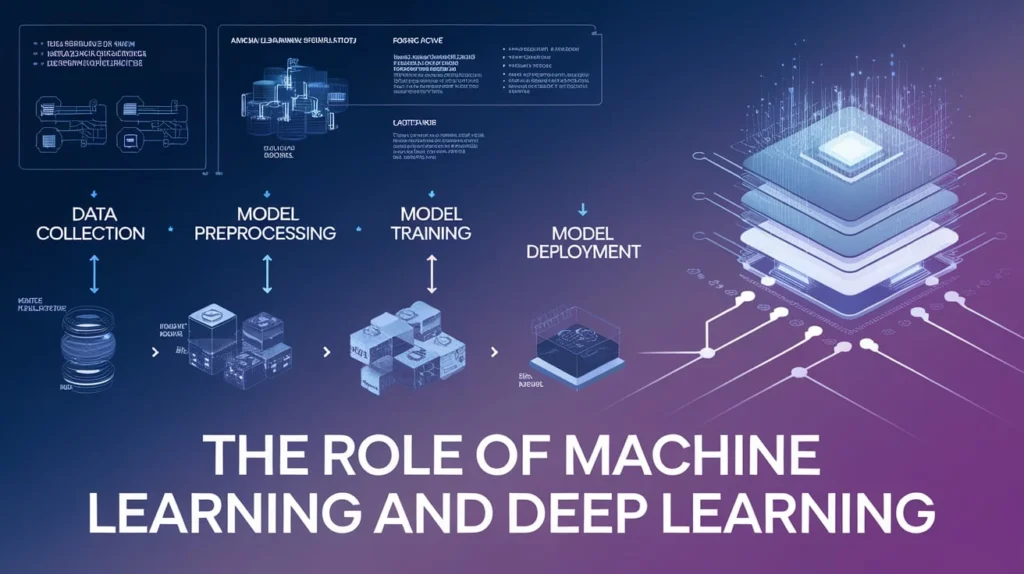
Machine Learning (ML) and Deep Learning (DL) are subsets of AI that play a critical role in cyber security:
- Machine Learning enables systems to recognize patterns in historical attack data and adapt to emerging threats.
- Deep Learning uses multiple layers of neural networks to identify complex threats like zero-day malware that traditional systems may miss.
By combining ML and DL, organizations can achieve dynamic, self-learning security systems that continuously evolve to counteract new attack vectors.
AI in Real-Time Cyber Defense
One of the most transformative aspects of AI in cyber security is real-time threat detection and response. AI-powered systems can monitor network traffic continuously, flag suspicious activities instantly, and even take corrective action without human intervention.
Benefits include:
- Immediate mitigation of threats
- Minimal disruption to business operations
- Enhanced resilience against coordinated cyberattacks
Example: AI-driven intrusion detection systems (IDS) can isolate affected devices automatically when unusual activity is detected, preventing malware from spreading across the network.
AI-Driven Automation and Incident Response
Automation is another critical advantage of AI in cyber security. Manual incident response is often slow, inconsistent, and resource-intensive. AI-driven automation streamlines processes such as:
- Threat triaging and prioritization
- Vulnerability scanning and patch management
- Automated reporting and compliance documentation
Benefits of AI automation:
- Reduces operational costs
- Enhances efficiency and consistency
- Frees up human analysts to focus on strategic tasks
Ethical and Privacy Considerations
While AI enhances cyber security, it raises ethical and privacy concerns:
- Data Collection: AI systems require access to sensitive information, which could be misused if not properly secured.
- Bias in AI Models: Poorly trained models may make biased decisions, such as flagging legitimate users as threats.
- Accountability: Determining responsibility for AI-driven actions in security breaches can be challenging.
Organizations must implement transparent AI policies, maintain ethical oversight, and comply with privacy regulations such as GDPR or CCPA.
AI and Cyber Security 2025 and Beyond
The future of AI in cyber security is both promising and complex. Emerging trends include:
- AI-Powered Zero-Trust Security Models: Continuous verification of user and device identities using AI.
- Adaptive Threat Intelligence: AI systems that dynamically learn from global threat data in real-time.
- Integration with IoT Security: Protecting interconnected devices through intelligent anomaly detection.
- Autonomous Cyber Defense Systems: AI-driven solutions capable of self-healing networks after attacks.
- Quantum AI Security: Leveraging quantum computing to enhance predictive threat analysis.
As cyber threats evolve, organizations adopting AI early will gain a strategic advantage in prevention, detection, and response.
FAQs
How does AI detect cyber threats? AI detects threats by analyzing vast datasets, recognizing anomalies, learning from historical attacks, and predicting potential vulnerabilities before they are exploited.
Can AI replace human cyber security analysts? AI complements human analysts rather than replacing them. While it automates detection and response, strategic decision-making and complex investigations still require human expertise.
What are the risks of using AI in cyber security? Risks include adversarial attacks on AI models, false positives, privacy concerns, and high implementation costs. Proper monitoring and model training can mitigate these risks.
How is machine learning different from deep learning in cyber security? Machine learning identifies patterns and learns from data, while deep learning uses layered neural networks to detect more complex and subtle threats, such as advanced malware.
What is the future of AI in he future involves autonomous defense systems, real-time adaptive threat intelligence, AI-driven zero-trust models, IoT security integration, and quantum AI applications.
Conclusion
The convergence of AIreshaping digital defense, providing organizations with intelligent, automated, and proactive tools to safeguard sensitive data. From predictive threat detection to real-time incident response, AI enhances security while reducing operational overhead.
However, the integration of AI requires careful planning, ethical considerations, and constant monitoring to address challenges such as privacy risks and adversarial attacks. As the digital landscape evolves, AI-driven will not just be an advantage—it will become a necessity for survival in an increasingly connected world.