In the modern era of technology, the way businesses operate and deliver services is undergoing a dramatic transformation. How SaaS is changing IT is no longer just a question; it’s a reality reshaping the entire digital ecosystem. Software as a Service (SaaS) has emerged as a cornerstone of this evolution, enabling businesses to streamline operations, reduce costs, and scale efficiently. Unlike traditional software models, SaaS allows organizations to access applications over the internet, eliminating the need for on-premises infrastructure and manual updates.
This shift is not just a technological upgrade; it represents a fundamental change in IT strategy, business models, and user experience. From startups to multinational corporations, SaaS is redefining how IT departments function, how software is delivered, and how organizations achieve agility in an increasingly competitive market.
What is SaaS and Why It Matters in Modern IT
Software as a Service (SaaS) is a cloud-based delivery model where applications are hosted by a third-party provider and accessed online. Instead of installing and maintaining software locally, users subscribe to the service and gain access through web browsers.
Key characteristics of SaaS include:
- Subscription-based pricing: Reduces upfront costs and aligns expenses with usage.
- Automatic updates: Ensures software is always up-to-date without manual intervention.
- Scalability: Easily adjust resources and user access as business needs change.
- Accessibility: Access from anywhere, on any device with an internet connection.
Why SaaS is Crucial for IT Transformation
SaaS is more than a convenience—it’s a strategic tool. IT departments can now focus less on maintaining infrastructure and more on enabling innovation. By reducing the burden of installation, updates, and server management, IT professionals can direct resources toward projects that drive business growth, such as data analytics, cybersecurity, and digital transformation initiatives.
The Evolution of IT with SaaS
Historically, IT relied heavily on physical servers, manual software deployment, and on-premises maintenance. This approach was often costly, time-consuming, and inflexible. SaaS disrupts this model in several critical ways:
Traditional IT ModelSaaS ModelBenefitsOn-premises softwareCloud-hosted applicationsReduces hardware and maintenance costsManual updatesAutomatic updatesImproves security and performanceFixed infrastructureScalable cloud resourcesSupports growth and flexibilityLimited remote accessAccessible from anywhereEnhances productivity and collaborationHigh upfront costsSubscription-based pricingPredictable budgeting and lower risk
This evolution has fundamentally shifted the role of IT from a cost center to a strategic partner in business innovation.
How SaaS Improves IT Efficiency
Streamlined Operations SaaS eliminates the need for traditional software deployment and maintenance. Updates, patches, and upgrades are handled by the provider, freeing IT teams to focus on strategic initiatives.
Enhanced Collaboration Modern SaaS applications often include integrated collaboration tools. Teams across the globe can work on shared documents, access real-time dashboards, and communicate seamlessly within the platform.
Reduced Total Cost of Ownership (TCO) By moving to a subscription-based SaaS model, organizations avoid large capital expenditures on servers and software licenses. Predictable monthly costs make budgeting more straightforward and reduce financial risk.
Rapid Deployment and Scaling New applications can be deployed in days rather than months. SaaS platforms offer scalability, allowing businesses to add or remove users and features as needed without overhauling infrastructure.
SaaS Security and IT Governance

One common concern is security. With critical business data hosted in the cloud, IT departments must ensure proper governance, compliance, and risk management.
SaaS security benefits include:
- Data encryption both in transit and at rest
- Multi-factor authentication (MFA) for user access
- Regular security audits and compliance certifications (e.g., GDPR, HIPAA)
- Centralized user management and access controls
Proper vendor selection and monitoring are essential to ensure that SaaS applications align with organizational security policies and regulatory requirements.
The Impact of SaaS on Enterprise IT
SaaS adoption is reshaping enterprise IT in multiple ways:
IT as a Service Broker
Instead of managing hardware and software, IT departments now act as brokers, selecting the best SaaS solutions for business needs, integrating them, and managing vendor relationships.
Greater Focus on Innovation
With routine maintenance offloaded to SaaS providers, IT teams can focus on innovation—developing new products, improving user experiences, and leveraging emerging technologies like AI and machine learning.
Improved Business Agility
SaaS allows organizations to pivot quickly in response to market changes. Whether launching new services, scaling operations, or integrating new technologies, SaaS platforms provide the agility needed to remain competitive.
SaaS Trends Driving the Future of IT
The SaaS market continues to grow at an unprecedented rate, and several trends are shaping its future:
- AI and Automation Integration Many SaaS platforms now incorporate AI-powered analytics, chatbots, and automation, reducing manual effort and improving decision-making.
- Vertical SaaS Solutions Industry-specific SaaS applications are gaining traction, offering tailored functionality for healthcare, finance, retail, and manufacturing.
- API-Centric SaaS APIs enable seamless integration with other software, creating interconnected ecosystems that enhance workflow efficiency.
- Edge Computing Integration Some SaaS providers are leveraging edge computing to reduce latency, improving performance for applications that require real-time processing.
- Subscription Economy Expansion Beyond software, businesses are adopting SaaS principles across services, infrastructure, and platforms, driving a broader subscription-based economy.
SaaS vs. Traditional IT: A Comparative Look
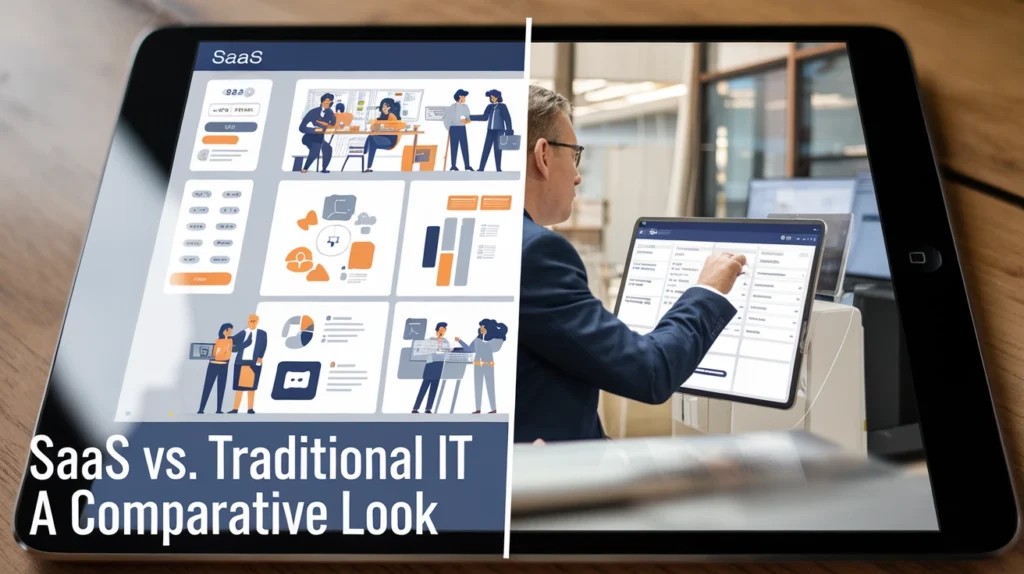
FeatureTraditional ITSaaSDeployment TimeWeeks to monthsHours to daysHardware RequirementHighMinimalMaintenanceManualAutomatedCostsHigh upfront, unpredictableSubscription-based, predictableFlexibilityLimitedHighly scalableAccessibilityOn-premises onlyAnywhere with internetSecurity UpdatesManaged in-houseProvider-managed, continuous
The comparison highlights how SaaS is not just an alternative but a transformative model that addresses many limitations of traditional IT.
Real-World Examples of SaaS Transforming IT
- Salesforce – Revolutionized customer relationship management (CRM) with cloud-based solutions that allow sales teams to track leads, automate workflows, and gain actionable insights.
- Slack – Enhanced team communication with a collaborative platform accessible across devices.
- Zoom – Changed enterprise communication by providing scalable video conferencing without infrastructure constraints.
- Shopify – Enabled businesses of all sizes to launch e-commerce operations without managing servers or software installations.
These examples demonstrate how SaaS solutions empower IT departments to deliver value while reducing operational complexity.
Challenges of SaaS Adoption
While SaaS offers numerous advantages, organizations must navigate potential challenges:
- Data Privacy Concerns – Ensuring sensitive information is protected under strict regulatory frameworks.
- Vendor Lock-In – Dependence on a single SaaS provider can pose risks if service terms change or outages occur.
- Integration Issues – Connecting SaaS applications with legacy systems can be complex.
- Customization Limits – Some SaaS platforms may not offer the same level of customization as on-premises software.
Organizations should adopt a robust SaaS strategy that addresses these challenges while leveraging the model’s benefits.
Best Practices for IT Teams Adopting SaaS

- Assess Business Needs Thoroughly – Understand workflows, performance requirements, and security expectations.
- Vet SaaS Providers Carefully – Look for security certifications, uptime guarantees, and strong support.
- Plan for Integration – Ensure APIs and data connectors are compatible with existing systems.
- Implement Governance Policies – Define user roles, access permissions, and compliance standards.
- Monitor Performance Continuously – Track application usage, costs, and ROI to optimize adoption.
Internal Linking Suggestions
- Link to content about cloud computing trends, as it complements SaaS discussion.
- Include references to cybersecurity best practices for IT professionals.
- Connect to case studies of digital transformation in enterprises for credibility and engagement.
FAQs
What is SaaS and how does it differ from traditional software? SaaS is a cloud-based software delivery model where applications are accessed via the internet rather than installed locally. Traditional software requires manual installation, maintenance, and updates.
How does SaaS improve IT efficiency? By automating updates, reducing infrastructure needs, and enabling remote access, SaaS allows IT teams to focus on strategic initiatives instead of maintenance.
Is SaaS secure for enterprise use? Yes, most SaaS providers implement robust security measures such as encryption, multi-factor authentication, and regular audits. However, IT teams must assess providers for compliance with industry standards.
What are some challenges of SaaS adoption? Challenges include data privacy concerns, vendor lock-in, integration with legacy systems, and potential limitations in customization.
How is SaaS shaping the future of IT? SaaS is enabling IT to become more strategic, driving innovation, agility, and cost efficiency while supporting emerging technologies like AI and edge computing.
Conclusion
Understanding how SaaS is changing IT is essential for modern businesses seeking agility, scalability, and efficiency. By moving away from traditional software deployment and embracing cloud-based solutions, organizations can reduce costs, enhance collaboration, and focus on innovation. While challenges like security and vendor lock-in exist, careful planning and strategic adoption make SaaS a game-changer in IT management.
The digital landscape will continue evolving, and SaaS will remain at the forefront of this transformation. Businesses that embrace SaaS not only gain operational efficiency but also position themselves for growth, adaptability, and competitive advantage in an increasingly digital world.