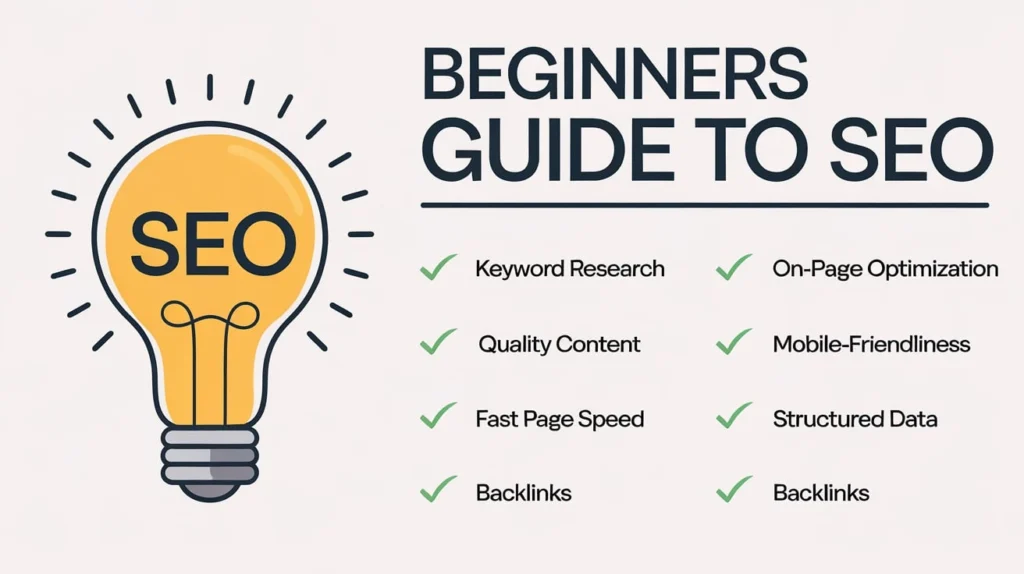
In today’s digital age, having a website isn’t enough. To ensure your website reaches the right audience, understanding SEO (Search Engine Optimization) is crucial. Whether you’re a blogger, business owner, or digital marketer, a solid grasp of SEO can transform your online presence.
This beginners guide to SEO is crafted to help you understand the fundamentals, practical strategies, and tools you need to succeed in the competitive online landscape.
What is SEO and Why is it Important?
SEO, or Search Engine Optimization, is the process of optimizing your website to improve its visibility on search engines like Google, Bing, and Yahoo. When executed correctly, SEO ensures your content ranks higher in search results, attracting organic (non-paid) traffic to your site.
Why SEO matters:
- Increase Website Traffic: Higher rankings mean more clicks and visitors.
- Boost Credibility: Users trust websites that appear on the first page of search results.
- Cost-Effective Marketing: Organic traffic reduces reliance on paid ads.
- Enhanced User Experience: Good SEO improves site usability and navigation.
SEO is no longer optional—it’s a necessity for anyone looking to grow their online presence.
Core Components of SEO
To get started with SEO, it’s essential to understand its core components. These are the pillars that form the foundation of any effective SEO strategy.
On-Page SEO
On-page SEO refers to optimizing elements within your website to improve its search engine ranking. Key aspects include:
ElementImportanceTips for BeginnersTitle TagsHighInclude primary keywords naturally. Keep under 60 characters.Meta DescriptionsMediumWrite compelling descriptions (150-160 characters).Headings (H1-H6)HighUse proper hierarchy; H1 for main title, H2 for subtopics.Content QualityVery HighWrite valuable, original content. Avoid keyword stuffing.URL StructureMediumUse short, descriptive URLs with keywords.Internal LinkingHighLink related content to enhance navigation and SEO juice.Image OptimizationMediumAdd alt text and compress images for faster load times.
Off-Page SEO
Off-page SEO focuses on building your website’s authority outside of your site. This includes:
- Backlinks: Links from other reputable sites increase your domain authority.
- Social Signals: Engagement on social media can indirectly boost SEO.
- Guest Posting: Writing on other blogs with links back to your site.
High-quality backlinks are more valuable than quantity. Focus on earning links naturally rather than using black-hat techniques.
Technical SEO
Technical SEO ensures search engines can crawl and index your website efficiently. Important aspects include:
- Website Speed: Fast-loading websites rank higher.
- Mobile-Friendliness: Mobile-first indexing is critical.
- SSL Certificate: HTTPS increases trust and rankings.
- Sitemap & Robots.txt: Helps search engines navigate your site.
- Canonical Tags: Prevent duplicate content issues.
Technical SEO may sound intimidating, but beginner-friendly tools like Google Search Console make it manageable.
Understanding How Search Engines Work
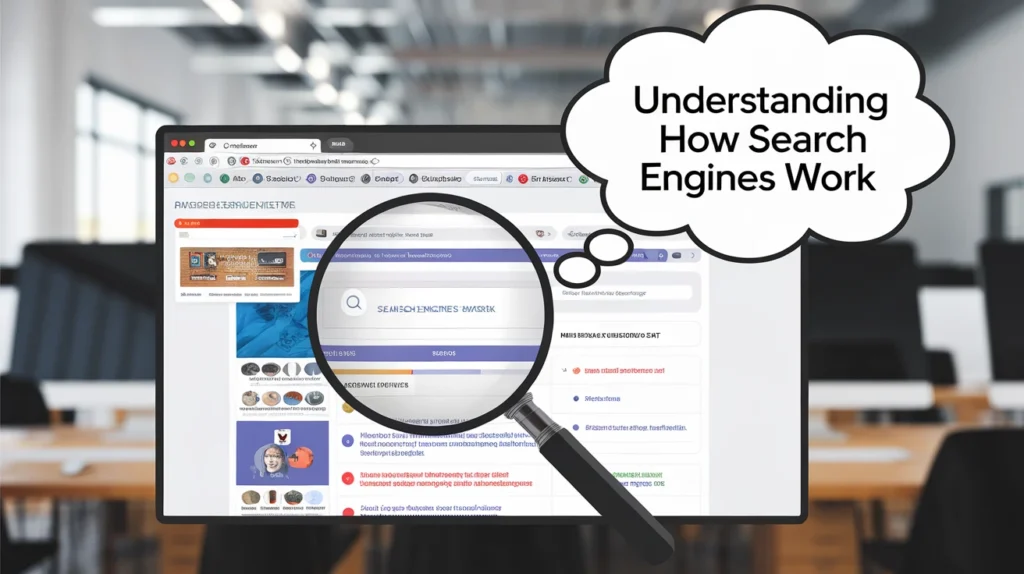
Search engines like Google, Bing, and Yahoo use complex systems to provide relevant results to users’ queries. The process starts with crawling, where bots (sometimes called spiders) systematically browse websites, following links to discover new and updated content. Next is indexing, where the search engine organizes and stores information from web pages in massive databases. Finally, ranking determines the order in which pages appear in search results based on hundreds of factors such as relevance, quality, and authority.
For beginners, it’s important to understand why this matters for SEO. Optimizing a website for search engines ensures that your content is easily crawled, correctly indexed, and ranked for the right keywords. Factors like mobile-friendliness, page speed, secure HTTPS connections, and proper site structure all influence search engine rankings. Understanding these processes helps beginners design websites and content that meet both user needs and search engine requirements.
how to Discover High-Intent Keywords That Attract the Right Visitors
Keyword research is the foundation of SEO because it identifies what your audience is actually searching for. Beginners should start by brainstorming topics related to their niche, then expand those topics into specific search terms. Keywords can be short-tail (1–2 words, high volume, high competition) or long-tail (3–5+ words, lower volume, easier to rank). Long-tail keywords often convert better because they reflect clear intent, such as “best budget laptops for students” instead of just “laptops.”
Using tools like Google Keyword Planner, Ubersuggest, AnswerThePublic, and Semrush free tools, beginners can analyze search volume, keyword difficulty, and user intent. Competitive analysis is also critical: checking which keywords your competitors rank for can help you target similar or underserved queries. Well-researched keywords guide content creation, meta tags, and on-page optimization, making your website more discoverable to the right audience.
Step-by-Step Optimization for Beginners
On-page SEO refers to everything you can control directly on your website to improve search rankings. Beginners should focus on several core elements:
- Title Tags & Meta Descriptions – Create compelling, keyword-rich titles (50–60 characters) and meta descriptions (150–160 characters) that summarize the page content and entice clicks.
- Headings (H1–H6) – Structure content logically with H1 as the main title and H2/H3 for subsections, making it readable for users and search engines.
- Content Quality & Keywords – Write original, useful, and engaging content. Naturally include target keywords in headings, paragraphs, and image alt text without keyword stuffing.
- Internal Linking – Connect relevant pages to guide users and distribute link authority throughout the site.
- URL Structure & Site Speed – Keep URLs short, descriptive, and include keywords. Optimize page speed by compressing images and minimizing code.
On-page SEO ensures that each page clearly communicates its topic to search engines while providing value to readers.
Safe Strategies to Boost Authority and Search Rankings
Backlinks, also known as inbound links, are links from other websites pointing to your content. Search engines treat backlinks as votes of confidence, indicating that your content is trustworthy and valuable. Beginners should focus on quality over quantity because low-quality or spammy links can harm rankings.
Effective backlink strategies include:
- Guest Posting on reputable blogs in your niche.
- Creating Shareable Content, like infographics, guides, or case studies.
- Engaging in Online Communities, forums, and Q&A platforms to provide valuable advice.
- Directory Submissions on credible websites.
- Social Media Promotion to naturally attract attention and links.
Always prioritize relevance and authority: links from high-authority, relevant websites carry more weight than dozens of low-quality links. Avoid buying links or using link farms, as search engines may penalize such tactics.
Measuring and Tracking SEO Success
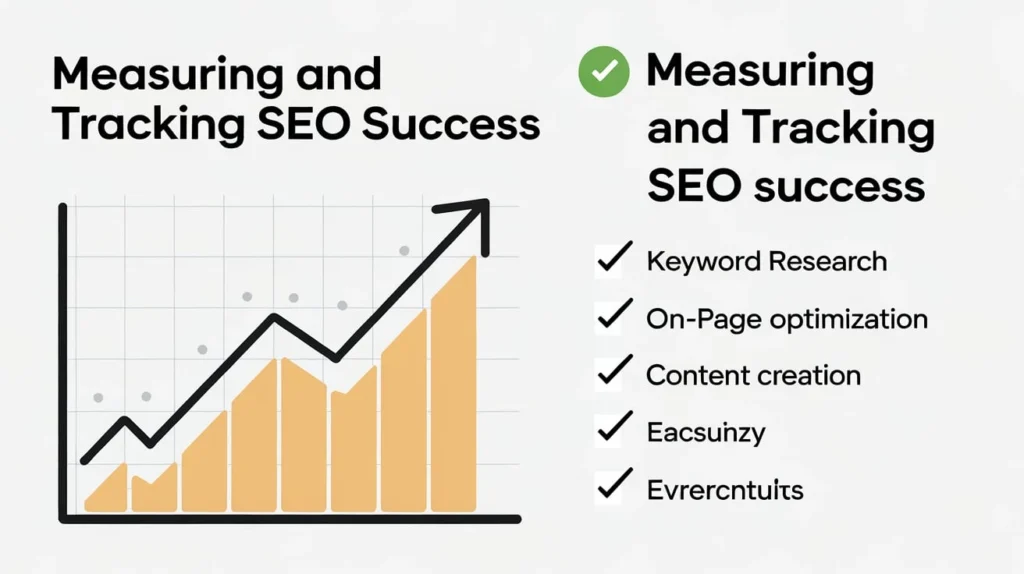
Beginners often underestimate the importance of tracking SEO performance. Using tools like Google Analytics and Google Search Console, you can monitor metrics that show how your website performs and where improvements are needed. Key metrics include:
- Traffic Sources – Understand where visitors come from: organic search, social media, referrals, or direct visits.
- Keyword Rankings – Track which keywords bring traffic and how they rank over time.
- Click-Through Rate (CTR) – Measures how often users click your link in search results.
- Bounce Rate & Session Duration – Analyze engagement and whether users find your content useful.
- Page Speed & Mobile Usability – Slow or unresponsive sites can harm rankings and user experience.
Tracking metrics helps beginners identify strengths, fix weaknesses, and adapt strategies for long-term SEO growth. Regularly reviewing data ensures you focus on actions that deliver real results rather than guesswork.
The Heart of SEO
Keywords are the words or phrases users type into search engines. Effective keyword research is essential for targeting the right audience.
Steps for Beginners:
- Brainstorm Topics: Think about what your audience searches for.
- Use Keyword Tools: Tools like Google Keyword Planner, Ahrefs, or SEMrush help find relevant keywords.
- Analyze Search Intent: Understand whether the user wants information, to buy, or to compare.
- Long-Tail Keywords: Phrases with 3+ words are less competitive and more targeted.
Example:
Short-Tail KeywordLong-Tail KeywordSearch VolumeDifficultySEOBeginners guide to SEO 20252,400MediumDigital MarketingBest SEO strategies for blogs1,600Medium
Creating SEO-Friendly Content
High-quality content is central to SEO. Search engines reward websites that provide value and engage readers.
Tips for SEO-Friendly Content:
- Use primary keywords in the title, headings, and naturally throughout the content.
- Include secondary keywords and related terms to enhance relevance.
- Format content with bullet points, tables, and numbered lists for readability.
- Add internal and external links for context and authority.
- Regularly update content to maintain freshness.
Example Structure for Blog Post:
- Introduction with primary keyword
- Subheadings with secondary keywords
- Visuals (images, charts, infographics)
- Conclusion with CTA (Call-to-Action)
Growing Your Authority
Link building is crucial for improving your site’s domain authority. Google considers backlinks as votes of confidence.
Effective Link Building Strategies:
- Guest posting on reputable blogs
- Creating shareable content (infographics, guides)
- Reaching out to industry influencers
- Broken link building: Replace dead links on other sites with your content
Avoid spammy link schemes—Google penalizes unnatural links.
Targeting Nearby Customers
Local SEO is essential for businesses that rely on physical locations. Optimizing for local search helps you attract nearby customers.
Key Steps:
- Claim and optimize your Google Business Profile
- Include NAP (Name, Address, Phone) on all pages
- Encourage customer reviews
- Use local keywords in your content
Example: “Beginners guide to SEO for small businesses in [City Name]”
SEO Tools Every Beginner Should Know
Leveraging the right tools can simplify your SEO journey. Here’s a beginner-friendly list:
ToolPurposeBest For BeginnersGoogle AnalyticsTrack website traffic and user behavior Google Search ConsoleMonitor indexing and performance SEMrushKeyword research, competitor analysis AhrefsBacklink analysis and site audit Yoast SEO (WordPress)On-page optimization Screaming FrogTechnical SEO audits.
Common SEO Mistakes to Avoid
Even beginners can avoid costly mistakes by understanding common pitfalls:
- Keyword Stuffing: Overusing keywords reduces readability and can result in penalties.
- Ignoring Mobile Optimization: Mobile-first indexing makes this critical.
- Neglecting Meta Tags: Missing titles and descriptions hurt CTR.
- Poor Site Structure: Confusing navigation affects user experience and rankings.
- Ignoring Analytics: Not tracking performance makes it hard to improve.
Measuring SEO Success
Tracking performance ensures your SEO efforts are effective. Key metrics include:
- Organic Traffic: Number of visitors from search engines
- Bounce Rate: Percentage of visitors leaving without interaction
- Click-Through Rate (CTR): Ratio of clicks to impressions
- Keyword Rankings: Monitor how keywords perform over time
- Backlinks: Quantity and quality of inbound links
Use tools like Google Analytics and Search Console to monitor these metrics.
Internal Linking Strategies for Beginners
Internal linking helps search engines understand your site structure and distributes ranking power across pages.
Tips:
- Link related blog posts within content
- Use descriptive anchor text
- Avoid excessive links on a single page
- Maintain a hierarchical structure: Homepage → Category → Subcategory → Post
Example: Linking from “Beginners guide to SEO” to “Top SEO Tools for 2025”
FAQs
What is SEO and why is it important? SEO (Search Engine Optimization) improves website visibility in search engines, driving organic traffic and building credibility.
How long does it take to see SEO results? Results typically appear in 3–6 months, depending on competition, content quality, and backlinks.
Can I do SEO myself as a beginner? Yes! Beginners can start with on-page SEO, keyword research, and content optimization using free tools.
What’s the difference between on-page and off-page SEO? On-page SEO optimizes content and website structure, while off-page SEO focuses on backlinks and external signals.
Are keywords still relevant in 2025 SEO? Absolutely. Keywords remain vital, but search engines also focus on search intent and content relevance.
Conclusion
SEO is a journey, not a one-time task. By mastering on-page, off-page, and technical SEO, creating high-quality content, and tracking your results, you can significantly improve your online visibility. Remember, the key is consistency, patience, and continuous learning.
Start applying these beginner-friendly strategies today, and watch your website climb the search engine rankings. With this beginners guide to SEO, you now have the roadmap to transform your website from invisible to irresistible.