In today’s hyper-connected world, businesses of all sizes face an ever-growing risk of cyber threats. From data breaches to ransomware attacks, the digital landscape is fraught with challenges that can compromise sensitive information, disrupt operations, and tarnish reputations.
This is where cybersecurity services for businesses come into play—offering protection, monitoring, and proactive strategies to safeguard digital assets. Understanding these services is not just a technical necessity but a strategic advantage for modern enterprises seeking to thrive in a secure digital environment.
What Are Cybersecurity Services?
Cybersecurity services refer to specialized solutions designed to protect digital infrastructure, networks, and sensitive data from cyberattacks. These services encompass a wide range of technologies, processes, and expertise that help businesses prevent, detect, and respond to cyber threats effectively.
Businesses today rely heavily on digital platforms for operations, communication, and customer engagement. A single cyber incident can lead to significant financial loss, legal penalties, and reputational damage. Therefore, investing in comprehensive cybersecurity services is essential to maintain operational continuity and trust among clients and stakeholders.
Why Cybersecurity Is Crucial for Businesses
Protection Against Data Breaches
Data breaches can expose sensitive customer and corporate information. A breach can result in financial loss, regulatory fines, and damage to customer trust. Cybersecurity services implement encryption, firewalls, and access controls to protect critical data.
Ensuring Business Continuity
Cyberattacks like ransomware can halt business operations for days or weeks. With cybersecurity solutions, businesses can ensure continuity by implementing backup systems, disaster recovery plans, and real-time monitoring.
Compliance with Regulations
Many industries are subject to strict data protection regulations, such as GDPR, HIPAA, or PCI DSS. Cybersecurity services help organizations comply with these regulations, avoiding costly penalties.
Safeguarding Reputation
A single cyber incident can harm a brand’s reputation permanently. Effective cybersecurity demonstrates a commitment to protecting client data, enhancing trust and credibility.
Table: Impact of Cyber Threats on Businesses
Threat TypePotential ImpactMitigation via Cybersecurity ServicesRansomwareOperational downtime, financial lossBackup solutions, endpoint securityPhishing AttacksCredential theft, fraudEmail security, employee trainingDDoS AttacksWebsite downtime, service disruptionNetwork monitoring, firewall protectionInsider ThreatsData leaks, internal sabotageAccess controls, monitoring, auditsMalwareSystem compromise, data lossAntivirus solutions, endpoint protection
Types of Cybersecurity Services for Businesses
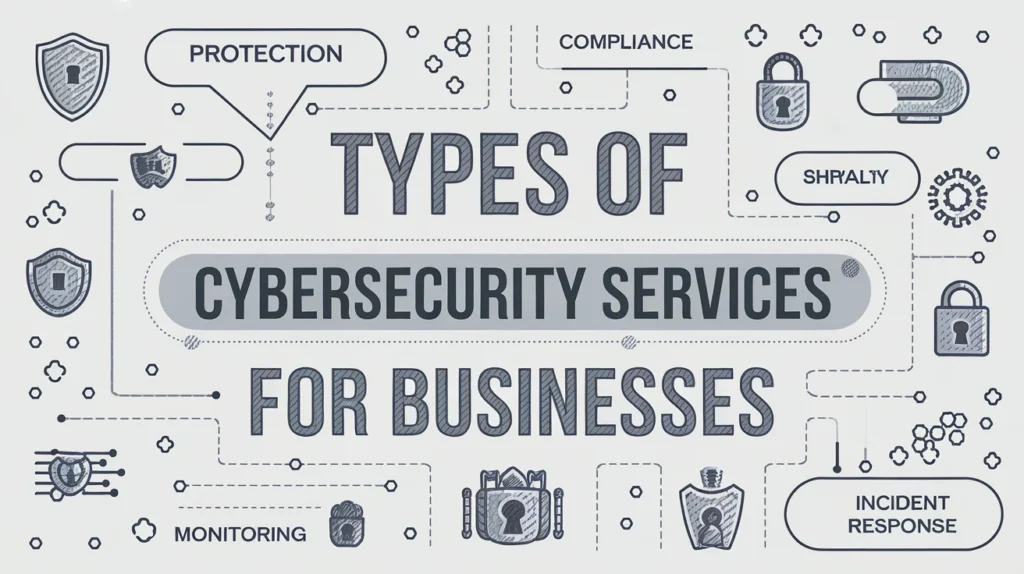
Modern cybersecurity is multi-faceted, addressing both technical and human elements. Here are the most commonly offered services:
Network Security
Network security involves protecting the infrastructure that connects devices within an organization. Services include:
- Firewalls and intrusion prevention systems (IPS)
- Network monitoring and traffic analysis
- Virtual Private Networks (VPNs)
- Secure Wi-Fi configurations
Why it matters: A secure network prevents unauthorized access, ensuring only legitimate users can interact with corporate resources.
Endpoint Security
Endpoints are devices like computers, smartphones, and IoT devices that connect to the network. Endpoint security services include:
- Antivirus and anti-malware software
- Device encryption
- Patch management
- Mobile device management
Benefit: Protecting endpoints minimizes vulnerabilities that cybercriminals can exploit.
Cloud Security
With cloud adoption on the rise, securing cloud environments is critical. Cloud security services include:
- Data encryption in transit and at rest
- Identity and access management (IAM)
- Security monitoring for cloud workloads
- Backup and recovery services
Advantage: Ensures data stored in the cloud remains confidential, integral, and available.
Managed Security Services (MSS)
Many businesses outsource cybersecurity to Managed Security Service Providers (MSSPs). Services include:
- Continuous monitoring of IT infrastructure
- Threat detection and response
- Security audits and compliance management
- Incident response support
Outcome: Organizations gain expert-level security without the need to maintain an in-house team.
Penetration Testing and Vulnerability Assessment
Proactive assessment of systems helps identify potential weaknesses before attackers exploit them.
- Penetration Testing: Ethical hackers simulate attacks to test security defenses.
- Vulnerability Assessment: Automated scanning to detect software and configuration weaknesses.
Impact: Reduces the risk of breaches by addressing vulnerabilities proactively.
Incident Response and Forensics
Cyber incidents are inevitable. Quick, structured responses can reduce damage. Services include:
- Incident detection and containment
- Forensic investigation of breaches
- Root cause analysis
- Remediation and recovery
Key Benefit: Minimizes downtime and financial loss while preserving digital evidence for legal purposes.
Security Awareness Training
Human error is a leading cause of cyber incidents. Awareness programs educate employees on:
- Recognizing phishing emails
- Safe password practices
- Reporting suspicious activity
- Data privacy principles
Result: Reduces risk from internal threats and enhances overall security posture.
Identity and Access Management (IAM)
IAM services ensure the right individuals have appropriate access. Key components include:
- Single Sign-On (SSO)
- Multi-factor Authentication (MFA)
- Role-based access controls
- Identity lifecycle management
Benefit: Prevents unauthorized access while improving operational efficiency.
How Cybersecurity Services Protect Businesses: Real-World Applications
- Financial Sector: Banks rely on cybersecurity to secure online banking platforms, protect financial transactions, and comply with strict regulations.
- Healthcare: Hospitals use cybersecurity to safeguard patient records, medical devices, and telehealth platforms.
- Retail: Online retailers protect e-commerce platforms and customer payment data.
- Manufacturing: Cybersecurity prevents operational disruptions caused by ransomware targeting industrial control systems.
By integrating these services, businesses create a layered security approach, often referred to as “defense in depth”, making it much harder for attackers to succeed.
Choosing the Right Cybersecurity Service Provider
When selecting a cybersecurity partner, consider the following criteria:
- Experience and Expertise: Look for providers with proven experience in your industry.
- 24/7 Monitoring and Support: Cyber threats do not follow business hours.
- Compliance Knowledge: Ensure they understand relevant regulatory requirements.
- Customization: Services should be tailored to your business size, industry, and risk profile.
- Technology Stack: Verify they use modern, reliable security solutions.
Tip: Request case studies or references to evaluate the provider’s effectiveness.
Cost Considerations for Cybersecurity Services
Investing in cybersecurity is not optional—it’s essential. Costs vary depending on business size, complexity, and service scope. Some common pricing models include:
Service ModelCost RangeDescriptionManaged Security Services (MSS)$1,000–$10,000 per monthOutsourced monitoring and threat managementPenetration Testing$4,000–$20,000 per testEthical hacking to identify vulnerabilitiesEndpoint Security$30–$80 per device/yearAntivirus, encryption, and device managementSecurity Awareness Training$50–$200 per employee/yearEmployee education on cybersecurity best practicesCloud Security$500–$5,000 per monthProtection for cloud infrastructure and applications
Investing in cybersecurity can save businesses from losses exponentially higher than the initial costs.
Common Cyber Threats Targeting Businesses

Understanding threats helps businesses better prepare. Some of the most prevalent threats include:
- Phishing Attacks – Deceptive emails trick users into revealing credentials.
- Ransomware – Malware encrypts data until a ransom is paid.
- Insider Threats – Employees intentionally or unintentionally compromise security.
- Distributed Denial of Service (DDoS) – Overloads systems, causing downtime.
- Advanced Persistent Threats (APT) – Long-term, stealthy attacks targeting sensitive data.
Proactive cybersecurity services are designed to detect and mitigate these threats before they escalate.
Internal Linking Suggestions for SEO
- Link to “Top Managed Security Service Providers for Small Businesses” for readers seeking MSS options.
- Link to “Understanding Cloud Security Solutions” for a deeper dive into cloud-based protection.
- Link to “Cybersecurity Compliance Checklist for Businesses” to guide regulatory adherence.
These internal links improve SEO and provide readers with additional valuable content.
FAQs
What are the essential cybersecurity services every business should have? Every business should implement network security, endpoint protection, cloud security, IAM, and employee training as a baseline.
How much do cybersecurity services cost for small businesses? Costs vary, but small businesses typically spend $1,000–$5,000 per month depending on services and monitoring needs.
Can cybersecurity services prevent all types of cyberattacks? No system is 100% secure, but these services significantly reduce risks, detect threats early, and help respond effectively.
How often should a business update its cybersecurity strategy? Ideally, businesses should review strategies quarterly and update systems, protocols, and training regularly.
Are cloud-based businesses more vulnerable to cyber threats? Not necessarily. Cloud platforms are highly secure, but proper security measures and monitoring are crucial to protect data and applications.
Conclusion
In the digital era, cybersecurity is no longer optional—it is a critical component of business strategy. From protecting sensitive data to ensuring regulatory compliance, cybersecurity services for businesses provide the tools, expertise, and peace of mind necessary to thrive safely online.
Investing in comprehensive cybersecurity solutions—ranging from network protection and endpoint security to managed services and employee training—creates a multi-layered defense system that safeguards your business against evolving threats.
The cost of ignoring cybersecurity can far outweigh the investment in professional services, resulting in financial loss, operational disruption, and reputational damage. By adopting a proactive, strategic approach to cybersecurity, businesses can not only protect their digital assets but also build trust with clients, partners, and stakeholders.